

A buyer’s lender pulled the preliminary title report eleven days before closing. Two Latin words sat in Schedule B, and the whole sale stopped breathing.
That’s how most Oregon homeowners meet a lis pendens. There’s rarely a lawyer’s letter or a formal warning first. It shows up in a title report that kills a sale already in motion. You can still sell the house, though the path looks nothing like the one you planned.
What Is a Lis Pendens and How Does It Affect an Oregon Property?
Before: a clean title, a motivated buyer, a closing date on the calendar. After: an exception on the title commitment, a lender backing out, and a seller wondering what happened.
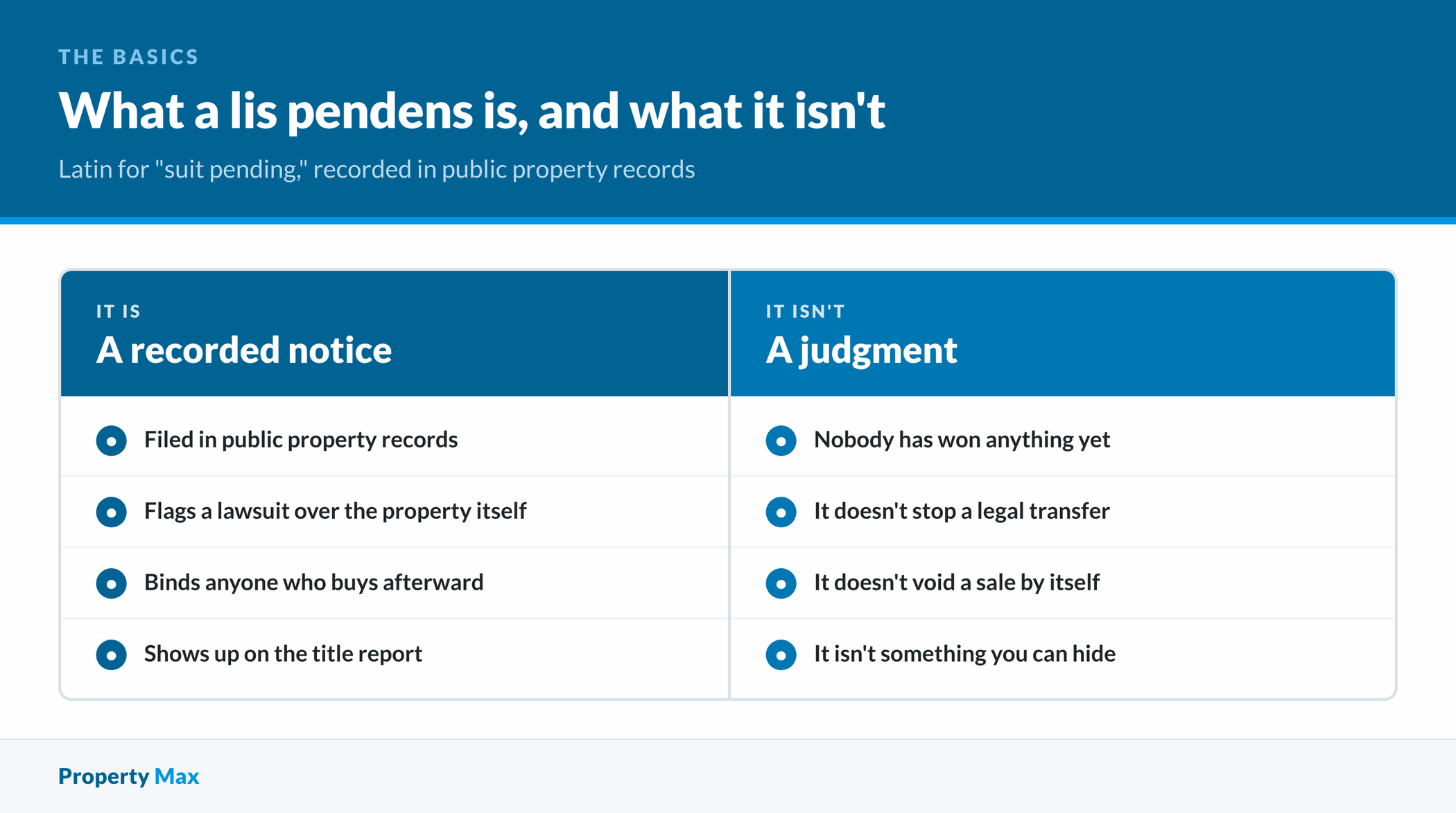
A lis pendens is a recorded notice telling the world that a lawsuit is pending over the property itself. Translated from Latin, it means “suit pending.” Oregon law calls it a notice of pendency, and the filer records it with the county clerk where the land sits. Anyone researching the title then sees that active litigation could affect ownership. It isn’t a judgment. Nobody has won anything yet.
Its legal effect is sharper than the paperwork suggests. Under ORS 93.740, anyone who buys or lends against the property afterward is on notice of the filer’s claim from the day it’s recorded. They can’t later say they were an innocent buyer with no knowledge of the lawsuit. That single rule gives the notice its weight, and the consequences can run into six figures.
In practice, it bites hard. Most buyers won’t buy a property with this kind of cloud on the title. Oregon title companies generally won’t insure one either. No title policy means no lender. Without a lender, your buyer pool shrinks to people paying cash.
What Causes a Lis Pendens to Be Filed on an Oregon Property?
Picture an heir whose late father’s second wife files suit claiming a verbal promise to part of the parcel. It hits the record three days before the survey comes back.
Boundary disputes top the list, especially on unimproved parcels with older, sloppier legal descriptions. A neighbor who’s driven across your field for fifteen years may sue claiming a prescriptive right. Such a suit can support a filing, since it concerns an interest in the land.
When a will is contested and raw acreage sits in an Oregon estate, one heir’s attorney often records a notice to freeze any sale while probate grinds along.
Failed sale contracts are another common trigger. A buyer who believes you breached a signed agreement can sue for specific performance, asking a court to force the sale. The claim attaches to the dirt itself.
Plain debts are different. Oregon’s statute covers suits involving title to, an interest in or a lien upon real property. So a creditor who’s simply owed money, with no claim against the property itself, generally cannot validly record a lis pendens. An Oregon appeals court also held that a complaint filed with the Construction Contractors Board doesn’t count, because it isn’t a lawsuit. We’d argue this is the most abused corner of real estate law. Someone angry about an unpaid invoice records a notice, your land goes unsellable, and you spend thousands proving they had no business filing it.
Foreclosure is the other big source. ATTOM counts the notice of default and the lis pendens together as the first phase of foreclosure in its reporting. Most Oregon foreclosures run outside court through a trustee’s sale, so no pending suit gets recorded. When an Oregon lender forecloses in court instead, the complaint and its notice are how the case begins.
What Happens When a Lis Pendens Is Filed During a Sale?
Plenty of sellers assume a pending suit like this means the contract is dead and everybody should move on.
That’s wrong. The sale is paralyzed, not voided, and the distinction matters for what you do next.
With the notice in place, the seller can’t convey insurable title, and the buyer can’t get title insurance or standard mortgage financing. An Oregon title company won’t issue a policy until the notice clears. The sale agreement usually survives, though the timeline on it does not.
Conventional mortgage underwriting wants clean title. Active litigation that could unwind the transaction counts as a title defect.
In October 2026, homes nationwide took a median of 35 days on market before going under contract, up from 33 days in September. NAR’s existing-home sales data, which you can read at nar.realtor, reports both figures. Add an Oregon escrow period and you’re near two months on a normal transaction. Contested cases can run far longer than that whole cycle.
Taxes keep coming due. Insurance renews.
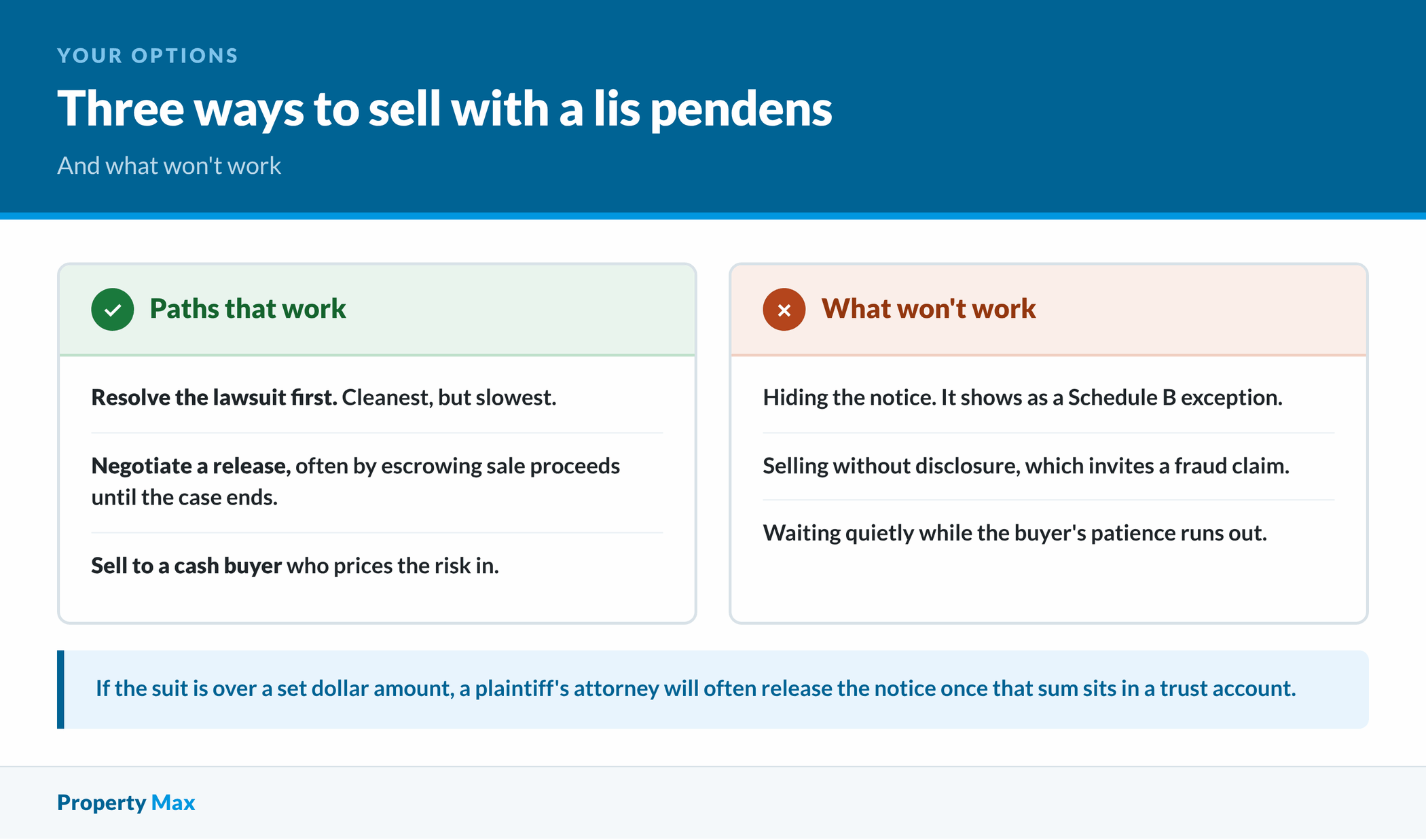
Sellers in this spot make one mistake over and over. They wait quietly, hoping the lawsuit resolves itself before the buyer’s patience runs out, and the patience usually runs out first. Calling a real estate attorney in Oregon during week one costs less than losing a buyer in week nine.
Can You Sell an Oregon Property with a Lis Pendens on It?
Get this wrong and your buyer may lose the house to the plaintiff after closing, then come after you.
Yes, you can legally sell. Oregon law doesn’t block the transfer, and it doesn’t automatically void it. The person receiving the property is simply on notice of the litigation. They could lose title if the plaintiff’s suit prevails.
So it comes down to who would knowingly accept that risk, and at what price.
Three realistic paths exist. You can resolve the underlying legal action first, which is cleanest and slowest. Another is to negotiate a release from the plaintiff, sometimes by escrowing sale proceeds until the litigation ends. Or you can sell to a cash buyer who understands exactly what they’re taking on and prices it in.
If the lawsuit involves a specific dollar amount, a plaintiff’s attorney will often agree to release the notice in exchange for that sum. The money then sits in a trust account until the case resolves.
What won’t work: hiding it. The notice is public record at the Oregon county clerk’s office. It shows up on the preliminary title report as a Schedule B exception, so buyers, lenders and underwriters all see it before anything closes. Selling without disclosure invites a fraud claim stacked on top of the lawsuit you already have.
Why Do Buyers Walk Away From a Lis Pendens Property?
If we were sitting at your kitchen table, we’d tell you the buyer isn’t scared of your lawsuit. They’re scared of becoming a defendant in it.
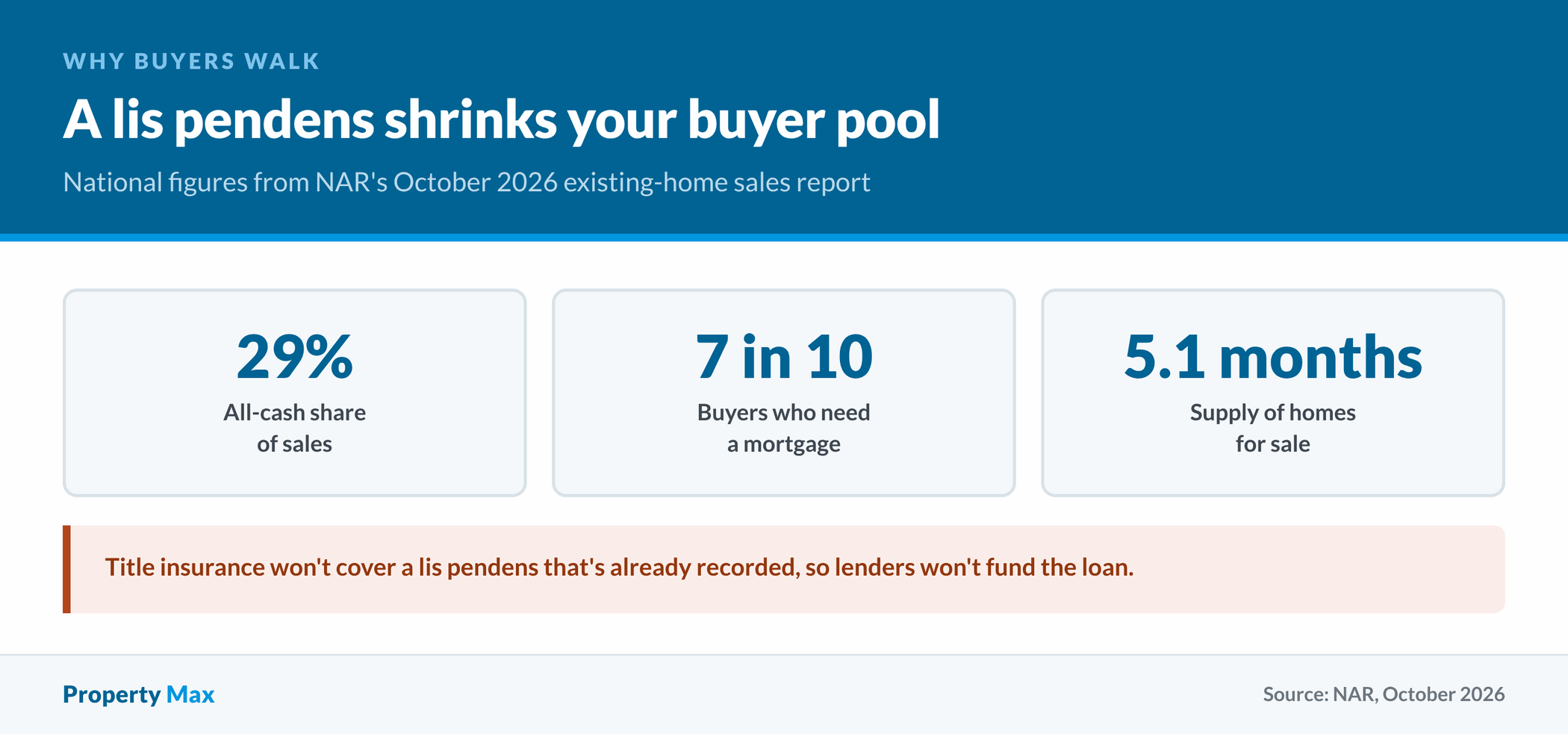
Their fear is rational. A buyer who closes over an active notice can lose the property outright if the plaintiff wins, with no insurance backstop. Title insurance won’t cover a notice that’s already recorded and visible at closing. The policy protects against unknown defects, not disclosed pending lawsuits.
Ask an Oregon family with two kids and a pre-approval letter to estimate the odds a judge rules against the plaintiff’s claim. They can’t, so they leave.
With a 5.1-month national supply in October 2026, sellers hold less leverage than a year earlier at 4.4 months. Inspections, credits and buydowns are negotiable in ways they weren’t. Buyers with more choices spend less time on complicated houses.
All-cash transactions made up 29% of sales in October 2026, up from 27% in September. Flip that around and roughly seven in ten buyers need a mortgage. Every one of them is unavailable to you while the lis pendens stands, so your market shrinks to under a third of its normal size before anyone weighs the lawsuit.
Careful buyers either refuse land subject to a lis pendens or will only buy at a discount.
How Do Investors Purchase Homes with a Lis Pendens?
Experienced cash buyers in Oregon evaluate the underlying lawsuit the way an appraiser evaluates comps. It’s a measurable risk with a number attached.
The first thing a serious investor does is pull the complaint. A boundary dispute over four feet of side yard is a different animal from a fraudulent-conveyance claim seeking to void your deed. One might cost eight thousand dollars to settle. The other could erase ownership entirely.
Investors still want protection, so offers usually get structured with holdbacks, indemnity agreements or a closing conditioned on dismissal of the suit.
Some buyers will take an assignment of your claims against the plaintiff. Others buy at a discount reflecting worst-case exposure and accept the gamble outright. Teams like Property Max look at title problems as solvable rather than disqualifying, which is a different starting posture than you’ll find on the open market.
Pricing is where sellers get frustrated, and we understand why. An offer on a property with a lis pendens reflects litigation cost, holding cost and the chance the buyer loses the asset.
One caution from experience: an investor who tells you the notice doesn’t matter is either inexperienced or not being straight with you. It always matters. Whether the discount is fair depends on what the Oregon court file says.
How Do You Clear a Lis Pendens From a Title in Oregon?
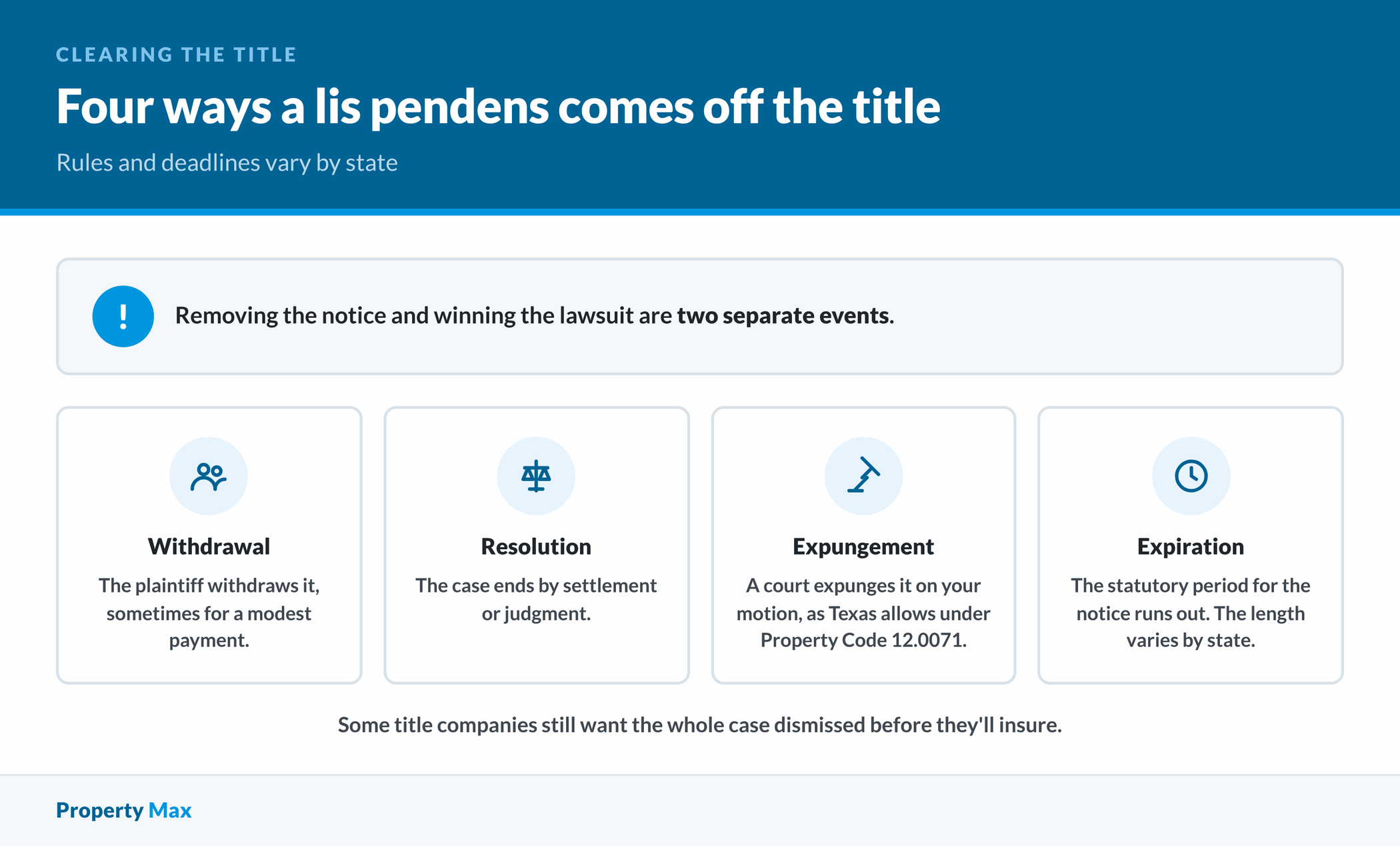
Removing the notice and winning the lawsuit are two separate events, and the first can happen long before the second.
Four routes exist. The plaintiff withdraws it, the lawsuit resolves by settlement or judgment, or a court strikes it on your motion. In some states a notice also expires after a set period. Oregon’s statute doesn’t set one, so a stale notice here usually needs a signed withdrawal or an order.
Under ORS 93.740, the party or attorney who signed an Oregon filing can discharge it the same way a mortgage gets discharged. When the filer won’t sign, your lawyer can ask the circuit court to strike it. States differ here. Texas handles it under Property Code section 12.0071, and a Texas court must grant expunction if the plaintiff can’t establish the probable validity of a real property claim. Oregon’s procedure and standard are different, so an attorney licensed where the land sits is the only reliable source on which rule governs you. We’d never guess at this ourselves when we’re looking at a property.
In Oregon, a petition under ORS 205.460 asks a judge to strike an invalid claim of encumbrance. The person who recorded it has to appear at a hearing and explain why it shouldn’t be struck.
Once a recorded release or an order striking the notice is on file with the county clerk, the cloud is gone from the record. Your insurer can then review the file again.
Plaintiffs with weak claims often take a modest payment and sign a withdrawal the same week.
Some title companies have declined to insure even after a court found a lis pendens improper. They insisted on full dismissal of the underlying case rather than just removal of the notice.
What Are Your Options in Oregon If a Lis Pendens Was Filed Wrongfully?
That resistance from underwriters is exactly why a bad-faith filing hurts so much. You can be completely right and still be stuck.
Oregon gives owners real teeth here. Under ORS 205.470, anyone who knowingly records an invalid claim owes the owner at least $5,000 or actual damages, whichever is greater, plus costs and reasonable attorney fees. In 2026 the Oregon Court of Appeals upheld striking notices recorded against 53 lots in a planned community. It applied that minimum to each lot, for $265,000 in total.
Not every bad filing pays out. The statute reaches people who knew the claim was invalid, so the facts of your case matter. Your county clerk’s office can tell you how recording and release work locally, and a local lawyer can tell you whether you have a damages claim in Oregon.
Move fast. Each month a wrongful lis pendens sits on your title is a month of mortgage payments, taxes and a market that keeps moving. Foreclosure filings nationally hit 227,548 properties in the first half of 2026, up 21% from a year earlier. ATTOM’s midyear report at attomdata.com has the full state breakdown. Distress is climbing, and a frozen property can slide into default while you’re busy being right.
Picture a sibling who records a lis pendens over the family home, claiming an oral agreement nobody can document.
Sometimes selling to a buyer who’ll absorb the dispute is worth more than winning a motion eight months later.
Frequently Asked Questions About Selling an Oregon Property with a Lis Pendens
Which Court Decides Whether a Lis Pendens Comes Off My Oregon Title?
The Oregon circuit court can strike the notice when the filer won’t sign a withdrawal. No single U.S. Supreme Court decision governs lis pendens nationwide, because the doctrine lives in state statutes like ORS 93.740 and in state court rulings. Oregon’s appellate courts have handled most of the recent cases, including a ruling that upheld a notice on Wallowa County farmland. Ask your attorney what those courts have said lately, since that’s the law that’ll govern your property.
How Is a Lis Pendens Different From a Foreclosure?
Foreclosure is the legal process a lender uses to take back a property after a borrower defaults on a mortgage. A lis pendens is just a recorded notice that litigation affecting the property is underway. It can stem from a divorce, a contract dispute, a boundary fight or an inheritance battle that has nothing to do with your loan. The two overlap only when a lender forecloses through litigation, which is the less common route in Oregon.
Will a Lis Pendens Show Up If I Only Want to Refinance Instead of Sell?
Yes, and it’ll stop the refinance for the same reason it stops a sale. Your new lender orders a title search, the notice appears as an exception, and the underwriter declines to fund without an insurable policy. Refinancing out of a problem loan usually isn’t available until the notice is cleared or released.
Can I Rent the Property Out While the Lawsuit Is Pending?
Generally yes, since the notice clouds title rather than possession. Still, check with your attorney before signing a lease that runs past the likely resolution date. Tenants have rights that can complicate a later sale, and some court orders in contested cases restrict what an owner can do. Collecting rent also doesn’t pause the legal bills.
Does the Notice Expire on Its Own If Nobody Pursues the Case?
Not in Oregon, as a rule. An abandoned case can leave a notice that’s technically dead but still sitting in the county record. Stale entries still scare off buyers and underwriters until something is recorded to clear them, usually a judge’s order or a signed release.
Should I Take a Lower Cash Offer or Fight the Claim First?
That depends on the strength of the claim and how long you can carry the property. If your attorney thinks the filing is baseless and a hearing is weeks away, waiting may pay off. Should the dispute be legitimate or the carrying costs drain you, a discounted sale that ends the bleeding is a defensible choice. It isn’t a defeat.
Selling a Home with a Lis Pendens in Portland and Across Oregon
Title trouble doesn’t have to stop a cash sale. Property Max buys houses in the Portland area and across Oregon, including ones with a lis pendens on the title. Redfin’s mid-year review put the Portland metro at 3.2 months of supply for the first half of 2026. Most buyers in that market need a lender, and a lender won’t fund a clouded title. A cash sale skips that step.
Live in the city? See how we buy houses in Portland with title problems.
Outside the metro? We buy houses in Salem too, or check the areas we serve in Oregon to see if your town is on the list.
Talk With Property Max About Your Lis Pendens
Send us the title report or tell us what the filing says. We’ll look at the lawsuit with you and give you a fair cash offer in writing. You can take it, wait for the case to clear or get a second opinion. When you’re ready, contact Property Max or fill out the short form below.
Helpful Oregon Blog Articles
- Can You Sell A House As Is Without An Inspection
- Selling a House With Solar Panels
- Do I Have To Sell My Home As Part Of Divorce In Oregon
- Average Cost To Sell A House In Oregon
- How Much Home Equity Do I Need to Sell My House
- How to Choose a Title Company
- How to Sell an Oregon Home with a Wet Crawl Space
- How to Sell an Apartment in Oregon
- How Long Does It Take to Sell a House in Oregon
- Can You Sell a Property With a Lis Pendens
- Sell House With Water Damage in Oregon