


Half the landlords who ask me how to sell an apartment in Oregon open with an apology. They think the tenant living in the unit is a problem they created. It isn’t, though it does change the math on price, timing, and which buyers will even write an offer. Redfin’s state data puts Oregon’s median sale price in August 2026 at $506,889, down about 0.6 percent from a year earlier, with the typical home going pending in 39 days. Those numbers describe vacant, photogenic houses. Occupied apartments go unnoticed while empty ones get all the attention. A tenant-occupied dwelling unit plays by a different set of rules, and Oregon law writes most of them.
How Do Tenant-Occupied Homes Sell Compared to Vacant Homes in Oregon?
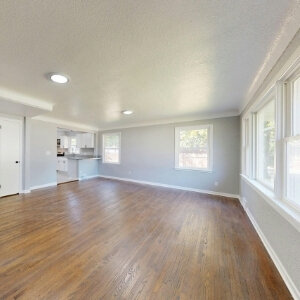
“So I’ll get less money because someone’s living there.” Not always, and that assumption costs sellers real offers. An occupied rental with a solid lease agreement and a paying tenant is an income stream, and investors pay real money for income streams. What shrinks is the buyer pool, not necessarily the price.
Retail home buyers, the couple touring six houses on a Sunday, want possession at closing. They can’t picture themselves in a bedroom full of somebody else’s furniture. Financing tightens the screw further, since certain loan programs require the buyer to occupy the property, and a lease running for 8 more months can disqualify them outright.
Investors don’t care about the furniture. They care about rent, condition, and whether your rent roll holds up under scrutiny.
That split shows up in the data. Statewide, 27 percent of Oregon homes sold above list price in August 2026, and those bidding wars happen almost exclusively on clean, empty, move-in-ready listings. Occupied units rarely draw competing offers.
Condition is the other gap. Tenants aren’t staging your apartment for you. Hard-used carpet, a cluttered garage, and a yard nobody’s touched in two seasons read as deferred maintenance to an appraiser. My honest opinion after buying plenty of these: if your unit is occupied, market it to investors from day one, rather than chasing retail buyers who trickle in and then walk away. I go deeper on that investor-first pitch in my notes on selling a rented home in Portland, if your unit sits in the metro.
Why Do Tenant-Occupied Homes in Oregon Fail to Sell?
A Hillsboro landlord reached out early last year after his mother moved into assisted living, and the visits started to eat up his weekends. He’d owned the same Washington County rental for nineteen years, had a month-to-month tenant who paid on time, and a garage stacked with paint cans from a remodel he never finished. He didn’t need top dollar. He needed the thing off his plate by spring.
Listings that stall share that thread. The seller has a life deadline, and the sale process has no respect for it.
Boring, fixable reasons kill listings. Lease terms don’t match the buyer’s financing. Showings get scheduled and canceled. An appraiser can’t get inside the contingency window, and the contract unravels three weeks in.
Price is the other killer. A comparative market analysis based on vacant comps tells you what the house would fetch empty, not what it would fetch with a tenancy attached and a buyer inheriting the rental agreement. Sellers anchor to the first number, then bleed through two price drops and 90 days before they adjust.
Tenant cooperation matters more than most listing agents acknowledge. A renter who feels blindsided can make a property unsellable without technically violating anything.
Got a tight timeline, or an apartment that needs work you’re not going to do? A direct sale skips most of these failure points. Property Max buys occupied properties across Oregon without asking you to empty the place first, so the single biggest reason these transactions fall apart never comes up.
Does the Tenant Stay with the Home During an Oregon Sale?
Selling the property does not cancel the lease.
Your buyer steps into your shoes as landlord. A fixed-term lease agreement runs through its end date regardless of who holds title. A month-to-month tenancy continues until somebody delivers a proper termination notice under the statute. Recording a deed does not affect the tenant’s right to stay.
Practically, the lease is part of what you’re selling. Buyers will want copies of every rental agreement, the payment history, any addenda, deposit records, and a written estoppel certificate signed by the tenant confirming rent, deposit, and move-in date. Skip that paperwork and expect a price reduction during inspection.
Security deposits and prepaid rent get handled through escrow at closing, usually as a credit to the buyer, since the obligation follows the property. Your escrow officer and title company will handle the prorations, but let them know early that this is a rental. Deposit accounting is not something to discover on the settlement statement the morning of signing.
Have you actually read your own lease lately? I’ve watched sellers swear a tenancy was month-to-month, then find a renewal clause that quietly rolled it into another fixed term. One document can decide whether your buyer closes.
One more piece. Notify your tenant in writing that ownership is changing and tell them where to send rent afterward. Oregon’s landlord-tenant statutes in ORS chapter 90 govern how these handoffs work, and skipping the courtesy step sours a relationship your buyer inherits.
Will Your Tenant Allow Showings While You Sell an Oregon Rental?
Which brings up the part of a sale you can’t schedule your way out of: getting people through the door. Under ORS 90.322, a showing requires at least 24 hours’ actual notice, and you may enter only at reasonable times. Actual notice means it has to reach the tenant. Dropping something in the mail doesn’t count.
Most landlords miss what comes next. Even with proper notice, a tenant can refuse a specific entry by telling you or posting a written denial on the door, and you can’t walk in over that objection. They aren’t allowed to withhold consent unreasonably across the board. They can absolutely blow up a Saturday.
Notice is the floor, not the strategy. A tenant who resents the intrusion will leave dishes in the sink and a dog in the kitchen for every appointment.
Offering something in exchange for cooperation tends to pay off. A rent credit for the month the apartment is listed costs less than two extra weeks of market time, and it buys you a property that shows well. Some landlords I know pay a flat amount for a tidy home at each confirmed showing.
There’s a formal version of that bargain, too. The same statute lets a landlord and tenant agree in writing to showings without the 24-hour warning. Three conditions apply, and the first is that the agreement only holds while you’re actively trying to sell. It has to be in a separate document from the rental agreement, signed by both of you. And they have to get separate consideration for signing. Translation: you pay for the convenience.
Bundle appointments instead of scattering them. Two open blocks a week beats fourteen random knocks, and tenants tolerate predictability far better than surprise. The notice rules and the scheduling side get more room in my guide to selling a property with a tenant in your Oregon home.
I always try to be straight with whoever’s living there about what selling means for them, since this sours fast otherwise. Will the buyer keep them? Are you giving proper notice to terminate? People cooperate when they know the plan and dig in when they feel managed.
Twenty showings on an occupied unit is a plan built to fail. If your tenant is unwilling or the property needs repairs you won’t make, selling directly to a cash buyer removes showings from the equation and transfers the tenant relationship at closing. I’ve watched that save landlords weeks.
Can You Evict a Tenant Before Selling a Home in Oregon?

“Can I just give notice and sell it empty?”
Usually not the way sellers hope. Oregon ended routine no-cause terminations for established tenancies. After the first year of occupancy, you generally can’t end a tenancy without either a tenant cause or a qualifying landlord reason, and wanting a vacant listing isn’t one of them.
Eviction and termination are two different animals. A termination notice ends the tenancy. An eviction is a court action filed after a tenant remains past a valid notice period. Filing one to clear a property for sale invites a counterclaim.
Under ORS 90.427, the qualifying reasons are narrow. You’re demolishing the property or converting it to non-residential use. You’re doing repairs that leave the place unfit to live in. You or an immediate family member is moving in, or you’ve accepted an offer from a buyer who intends in good faith to live there as a primary residence. That last one is the sale pathway, and it carries strings.
Those strings changed recently, and this trips people up. SB 586 took effect in late September 2025. You now have to hand the tenant written evidence of the accepted offer at or before the moment you deliver the termination notice. The old rule gave you up to 120 days after acceptance. Working from a 2024 checklist is how you lose four months.
SB 586 also opened a second route outside Portland. Serve 90 days, or serve 60 days and pay one additional month’s rent. Owners of five or more units already owe a month’s rent on the 90-day route, so the faster option costs them two months total. None of that applies inside Portland city limits, where City Code 30.01.085 governs instead. The same bill allows sellers to end a tenancy in a fully occupied plex when the buyer intends to live in that unit.
Milwaukie and a handful of other cities layer their own requirements on top. Check local rules before serving anything, because a defective notice restarts your entire timeline.
How Do You Sell an Oregon Home Under a National Eviction Moratorium?
Serve a notice that a moratorium blocks, and you’ve handed your tenant a defense, a delay, and possibly your buyer’s earnest money back.
No national eviction moratorium is in force. The CDC order from the pandemic lapsed at the end of July 2021, and the Supreme Court blocked its replacement on August 26, 2021, in Alabama Association of Realtors v. HHS. The Congressional Research Service documents that timeline. Anyone telling you that a federal ban still governs your rental is relying on outdated information.
What replaced it is a patchwork that shifts every legislative session. HB 2134 took effect January 1, 2026, for fixed-term leases signed on or after that date. Serve a 90-day termination notice for a qualifying landlord reason, and your tenant can answer with a 30-day notice to vacate. If they do, you can’t charge a lease-break fee, and you can’t collect rent past their termination date. Multnomah County’s housing legal resources page tracks changes like that one.
So the working approach is simple. Verify current Oregon law and your city’s ordinances the week you plan to act, not the month you decided to sell. Write your sale agreement so that possession terms and any relocation obligations are spelled out, and name who pays.
Sellers who’d rather not track any of it sell occupied. The buyer assumes the tenancy and the compliance burden that rides along with it. Landlords with a rental in the Willamette Valley can ask cash home buyers in Salem, OR, about a tenant-in-place sale.
What Is Oregon’s Mandatory Tenant Relocation Assistance Law?
$4,500. That’s the relocation payment Portland requires for a three-bedroom or larger dwelling unit. Tiers below it run $2,900 for a studio or SRO, $3,300 for a one-bedroom, and $4,200 for a two-bedroom, under Portland City Code 30.01.085. Payment is due at least 45 days before the termination date specified in the notice.
Oregon law has its own version. End a tenancy for a qualifying landlord reason, and you owe the tenant one month’s periodic rent, payable when the termination notice is served. The notice must also set a termination date at least 90 days in the future.
Small owners get a break, since the statute exempts a landlord holding an ownership interest in four or fewer residential dwelling units from that payment.
Portland’s ordinance sets its own exemptions and offset rules where both obligations could apply, so you don’t always owe the sum of both. Get it in writing from a landlord-tenant attorney before you cut a check. Underpaying by a few hundred dollars can void the notice and restart your timeline.
The exemption most sellers ask about is the owner-occupancy one. The city allows a limited exemption for a landlord temporarily renting out a principal residence. It’s narrow, it runs through an application and an acknowledgment letter from the housing bureau, and it doesn’t stretch to cover an investment apartment you’ve never lived in.
Miss the payment, miss the deadline, or miss the required notice language, and the tenant can sue. Under that code, a landlord who fails to comply is liable for up to three times the monthly rent, plus actual damages, the relocation assistance itself, and the tenant’s attorney fees and costs. Break the state termination rules, and ORS 90.427 adds three months’ rent on top of actual damages. Neither figure is one you want to meet in a courtroom. None of those penalties reach a landlord who never ends the tenancy, which is why some owners sell an Oregon house fast for cash with the renter still in place.
The Cleanest Path Is Usually Selling Occupied

Every obligation above attaches to ending a tenancy. None of them attaches to selling a building.
Transfer the property with the tenant in place, and the lease travels with the deed. That’s the cleanest exit a seller gets, in my experience. Your buyer inherits the rent roll, the security deposit, and the notice requirements. You close, you’re out, and nobody counts days from a termination notice.
This is why investor buyers pay cash for occupied units in Portland, Gresham, Beaverton, and Hillsboro without asking you to deliver a vacant unit. A performing tenant is an asset to them, not a problem to solve. If your rental sits inside city limits, a company that buys houses in Portland, OR, can take the unit with the tenant still in it.
The tradeoff is price. Retail buyers using financing generally want possession at closing, and that pool is where top-of-market offers live. Occupied closings trade some of that number for speed, certainty, and zero exposure to relocation penalties.
Run both scenarios with real figures. Vacant sale price, minus the relocation payment, minus 90 days of lost rent, minus turnover costs, minus the risk your notice gets challenged. Compare that to the occupied offer sitting in front of you today.
Frequently Asked Questions
Can I sell my house in Oregon while a tenant is still living in it?
Yes. The lease transfers with the property, and the tenant keeps their rights and their term. You’ll need to disclose the tenancy, hand over the lease and deposit records, and prorate rent at closing.
Do I have to pay relocation assistance if the buyer wants the unit empty?
If the tenancy ends for a qualifying landlord reason, the obligation exists regardless of who wants the vacancy. Spell out in the sale agreement who funds it, because the statute looks to the landlord of record.
How much notice does a month-to-month tenant get?
During the first year of occupancy, 30 days in most of Oregon and 90 days in Portland and Milwaukie. After that first year, there’s no plain no-cause option left, so you need a qualifying landlord reason with 90 days’ notice, or the 60-day route plus the extra month’s rent where available. Fixed-term leases generally run to the end of the term.
Does a tenant have to allow showings?
Not automatically. Give 24 hours’ actual notice, and you can enter at reasonable times, but they can deny consent to a specific entry, and you can’t override that. Occupied sales usually go smoother with fewer showings, not more.
Own a rental apartment in the Portland metro and weighing a vacant sale against an occupied one? It’s worth seeing what an as-is, tenant-in-place offer looks like on paper before you send anyone a notice. No pressure either way. Get the number, compare it to your other option, and decide from there. When you’re ready to see yours, contact us, and we’ll put one together.
Helpful Oregon Blog Articles
- Can You Sell A House As Is Without An Inspection
- Selling a House With Solar Panels
- Do I Have To Sell My Home As Part Of Divorce In Oregon
- Average Cost To Sell A House In Oregon
- How Much Home Equity Do I Need to Sell My House
- How to Choose a Title Company
- How to Sell an Oregon Home with a Wet Crawl Space
- How to Sell an Apartment in Oregon