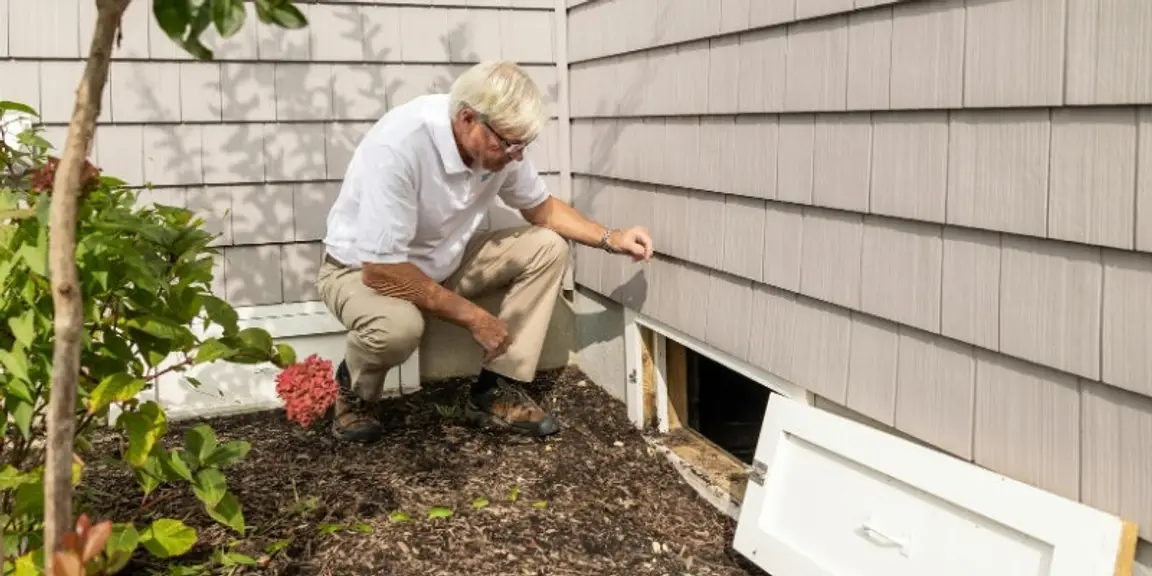

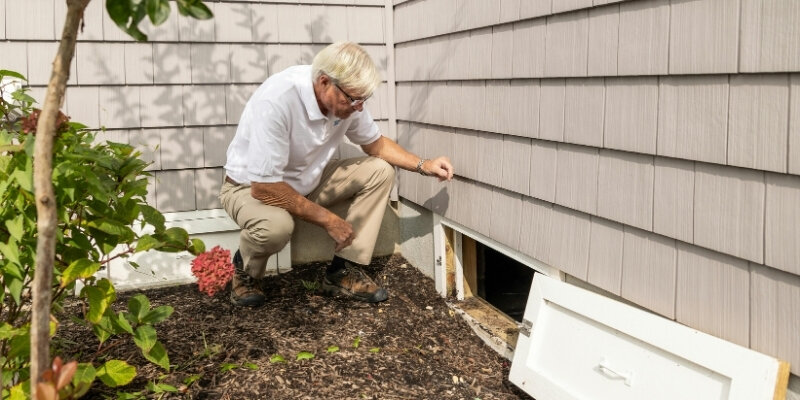
You pop the access hatch on a January afternoon, point a flashlight into the dark, and find an inch of water in the crawl space, sitting on a torn sheet of plastic. Your stomach drops. Half the older houses I walk west of the Cascades have some version of this going on under the floor. Most owners had no idea until an inspector told them. Water under your house doesn’t make it unsellable. It changes who pays to fix it, and when.
Selling a House with Crawl Space Water Issues in Oregon: Know Your Situation First
A seller in Beaverton lost a contract in February over four inches of standing water under the kitchen. Same house, nine weeks later, closed as-is at a number both sides could live with.
Not every wet crawl space is the same animal. Seasonal seepage shows up after a three-day atmospheric river and dries out by April. Other water sits year-round because the grade slopes toward the foundation. Then there’s the serious version: standing water, fungal growth on the subfloor, soft joists, and a musty smell that follows you into the living room.
Knowing which one you’ve got sets your entire pricing strategy.
Tell them apart by looking twice. Go under after a hard rain, then go back during a dry stretch and see what’s left. Shine the light low on the concrete piers and the foundation wall. A stain line or a chalky mineral crust tells you how high the water gets and how often it comes. Damp soil in February that’s dusty by July is a different conversation than a puddle that never moves.
Oregon’s geography does sellers no favors here. Portland averages about 37 inches of rain a year, Salem around 40, and Eugene about 41, according to Oregon Climate Service data. Nearly 40 percent of that total falls between December and February, onto clay soils that drain slowly. Post-war houses in Milwaukie, Lents, and older parts of Salem and Albany sit on shallow footings, with crawl spaces nobody ever designed to stay bone dry. Coastal homes still get more water, plus salt air on top of it.
Statewide, the median Oregon home sold for $506,889 in August 2026, down about six-tenths of a percent from a year earlier, according to Redfin. Buyers negotiate harder when they aren’t competing with three other offers. Your moisture problem carries more weight in a balanced market than it did in 2021.
So the first job isn’t repair. It’s an honest look at what’s under there.
How Do You Assess Crawl Space Water Damage Before Listing Your Home?
For years, I told sellers to dry everything out before anyone looked, and that advice cost some of them money. Drying a crawl space doesn’t fix the cause. A buyer’s inspector reads the water line on the piers anyway.
Get someone qualified under the house before you list. A licensed home inspector charges a few hundred dollars and hands you a neutral written record of the moisture level, the vapor barrier condition, the joists, and any pest damage. A waterproofing contractor will come out for free, and in my experience buying houses, the estimate that comes back describes the most expensive possible solution. Both have value. Only one is unbiased.
Things worth writing down: whether the water is standing or just damp soil, whether the plastic is intact or shredded, whether the insulation sags or has fallen, and whether the wood shows staining or actual rot. Push a screwdriver into a joist near the foundation wall. I’ve leaned on that test since guessing wrong on a crawl space years ago. If it sinks in, you’ve got structural work, not a moisture problem.
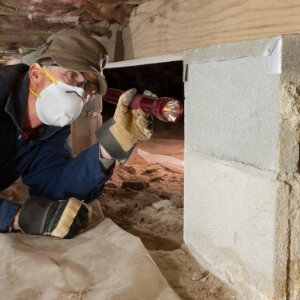
Going under yourself means a respirator, long sleeves, eye protection, and somebody who knows you’re down there. Photograph everything, including the boring parts, and lay a tape measure in the frame so the scale is obvious later. Those pictures serve as your evidence when a buyer’s inspector describes the same conditions in scarier terms. Ask whether your inspector handles a wood-destroying organism report or can refer you to someone who does. Oregon buyers often order one anyway, and you’d rather see it first.
A couple of years back, I bought a Gresham ranch from an out-of-state heir. She’d taken a job transfer and had five weeks to be out of the country. Her inspector found water pooling at the north corner and a garage still packed with her father’s fishing gear. There wasn’t time to argue about repairs, so we didn’t. She closed before her flight.
Ask about humidity readings and ventilation, too. High humidity with no standing water is a much cheaper story to tell than a working creek under your bedroom.
What Are Oregon Seller Disclosure Requirements for Crawl Space Water Problems?

Oregon’s disclosure form gives a buyer five business days after delivery to revoke their offer, under ORS 105.475. Refuse to hand the form over at all, and they can back out any time before closing. Sellers get blindsided by that, mostly because nobody mentions it until it happens to them. Business days, not calendar days, so a form you deliver on Friday leaves a buyer sitting with your answers well into the following week.
Oregon law specifies what the form must look like. ORS 105.464 sets out the required form, which includes more than 50 questions covering title, plumbing, drainage, the foundation, and past water intrusion. Some transfers are excluded, including sales by financial institutions that took the property through foreclosure or a deed in lieu, and sales by court-appointed personal representatives, trustees, conservators, and guardians. Your real estate attorney or title officer can confirm whether an exclusion covers your situation.
Answers rest on your actual knowledge, not on what a perfect inspector might find. “Unknown” is a legitimate answer when it’s true. The last question, the catch-all about other material defects, is the exception: that one takes a yes or a no.
What gets sellers in trouble is the half-answer. You had a sump pump installed in 2019, so you check the drainage question and say nothing about the two winters before that. A buyer’s attorney reads that differently than you do. Write out the explanation lines in full, attach the receipts, and let the paperwork do the arguing for you.
Pull together every piece of paper tied to the work you’ve done. Invoices from the gutter company, the plumber who chased a leak, the handyman who replaced a section of plastic, plus your own inspection report and dated photos. Describe what you saw and what you paid someone to do about it, and resist the urge to diagnose. “Water stood in the northeast corner two winters running, drain tile installed spring 2022” beats guessing at a cause. If you inherited the house or rented it out for a decade and never once went under the floor, say exactly that.
Disclosing water kills far fewer sales than people think. Concealing it kills them after closing, when the fix is a lawsuit instead of a price adjustment. Every serious cash buyer in this state, including a local operation like Property Max, reads that form closely and prices from it rather than running from it.
Why Do Oregon Home Buyers Pay Close Attention to Crawl Space Moisture (and How Does It Affect Your Home’s Value)?
Leave the water unpriced, and the buyer prices it for you, usually at two or three times what the repair actually costs. That’s the whole dynamic in one sentence.
Retail buyers hear “crawl space water,” and their minds go straight to mold, rot, and health problems for their kids. Fear isn’t rational, and it isn’t proportional. I’ve watched a four-figure drainage fix turn into a five-figure credit request once a buyer’s construction-industry uncle weighed in.
Lenders add their own pressure. An FHA appraiser must flag a crawl space that’s excessively damp or has pooled water. Where moisture shows up, HUD’s handbook calls for a vapor barrier or other moisture control measures before the loan moves forward. That puts your closing date at the mercy of a contractor’s schedule.
Think about what a two-week repair delay does to a buyer who already gave notice on their apartment.
When the credit request lands, don’t respond emotionally, and don’t respond the same day. Ask for the estimate it’s based on. Half the time, there isn’t one, just a number somebody felt good about. If an estimate exists, read the scope against your own inspection, then counter with a dollar figure tied to the work that’s genuinely warranted. Buyers who want the house will meet you there. The ones hunting a discount show themselves fast.
Timing feeds into this, too. Portland’s median sale price sat around $525,000 for the three months ending in August 2026, with homes selling in about 19 days, per Redfin’s Portland data. Fast-moving neighborhoods give you cover. A listing that’s been on the market for more than 60 days in Roseburg or Coos Bay invites every buyer to come at you with a repair offer. A company that buys houses in Portland, OR, prices off condition instead, so days on market stop mattering.
My honest read after years of this: crawl space water knocks value down less than sellers fear and more than they hope. Low single digits of the price for a manageable drainage issue. Considerably more once rot and remediation enter the picture.
What Crawl Space Repairs Are Worth Making Before You Sell Your House?
A landlord in Salem called me, convinced he needed a full waterproofing system on a rental near the fairgrounds. Two downspouts were dumping straight against the foundation. Extending them and regrading a ten-foot strip of dirt solved most of it in a weekend.
Cheap fixes first, always. Gutter cleaning, downspout extensions that carry water six feet away from the house, and soil graded away from the house handle a surprising share of Oregon crawl space complaints. Those three rarely top a few hundred dollars combined.
Fresh vapor barrier over shredded plastic is the next best dollar you’ll spend. It looks dramatically better to an inspector, and it genuinely cuts the humidity rising off bare soil.
Now the big-ticket end. Angi’s 2026 cost data puts full crawl space encapsulation between $5,000 and $15,000, with an average of about $5,500, depending on square footage and condition. Interior drainage is its own project: HomeAdvisor puts an interior French drain at $5,000 to $18,000, with a sump pump installed on its own running $600 to $2,000. Mold work in a crawl space commonly costs between $1,000 and $3,500.
If you hire out the larger work, check the contractor’s license with the state board and get the scope in writing, line by line. Ask that the estimate name materials by thickness and give the linear feet of pipe, then have your inspector read it before you sign. A line that says “waterproofing, $8,000” gives you nothing to compare it to. Then ask the two questions most sellers forget. Does the warranty transfer to the next owner, and what documentation does the buyer receive at closing? A transferable warranty is a selling point you can hand across the table. An undocumented repair is just a story. Schedule the work for a dry stretch if you can, because regrading and exterior drainage go sideways fast in February mud.
Here’s where I’ll disagree with most agents. Don’t encapsulate right before you sell. You rarely recover the full cost; the work eats up weeks you may not have, and a brand-new system makes buyers wonder what it was hiding. Fix the drainage issues, replace the plastic, clean out the space, and let the price cover the rest.
Structural repairs are the exception. Rotted joists and failing piers have to be addressed, or financed buyers can’t close at all.
How Can You Sell a House Fast with Water in the Crawl Space in Oregon?

Thirty-nine days. That was the median time an Oregon listing spent on the market in August 2026, and the clock starts after your prep work, not before it. Add inspection, appraisal, and lender timelines, and two to three months from listing to keys is normal.
Three paths, each fitting a different seller.
Listing on the MLS as-is works when you have time and a house that shows well upstairs. Order your own inspection, hand the report to every buyer alongside the disclosure, and price with the moisture baked in. You’ll lose some buyers. The ones who stay negotiate from your numbers instead of their imagination.
Repairing first and listing after suits sellers with cash reserves and a flexible calendar. Run the math honestly: repair cost plus carrying cost plus commission, against the higher sale price you’d expect. Count the months of mortgage, taxes, insurance, and utilities you’ll pay while the work happens. That column adds up quietly, and it’s the one most people leave off the napkin.
Going direct to a cash buyer skips the financing contingency, the appraisal, and the repair negotiation. Companies that buy houses in their current condition, Property Max among them, take the crawl space on as part of the transaction and close in a couple of weeks. You trade some price for certainty and speed. Read how the process works before you call anyone, and know that cash house buyers in Salem, OR, handle a wet crawl space the same way. For some sellers, that’s obviously the right call, and for others it isn’t.
If you go that route, ask a few pointed questions before you sign. Who actually takes title, the person in your kitchen or someone they assign the contract to? What happens to the price if they go under the house and find more than expected? Who pays closing costs, and can you pick the closing date? Straight answers to all four are a good sign. Vagueness on any of them is worth walking away from.
A couple in Albany had been quietly covering two mortgages for almost a year after buying their retirement place. Water under the back bedroom and a detached shop with a flooded slab meant their old house wouldn’t pass inspection, and every retail buyer walked away. They sold it as-is in November. The woman told me the relief hit her in the grocery store that same afternoon.
Frequently Asked Questions
Most crawl space water problems cost less to solve than sellers assume and more to ignore than buyers let on.
How Much Does Water Damage Lower What a House Is Worth?
It depends almost entirely on whether the damage is cosmetic or structural. Damp soil under an intact floor system usually costs you a modest slice of the sale price, roughly what the repair would run plus a small fear premium. Rot in the framing, active mold, or a failing foundation pushes the discount much deeper, because those buyers are budgeting for contractors and time off work.
What Will It Cost to Fix Water Under My House?
The range is wide, from a couple of hundred dollars for downspout and grading work to the five-figure numbers listed earlier in this article for full encapsulation with drainage. Get three estimates and make sure each one describes the same scope, because contractors define waterproofing very differently. An estimate far below the others is probably plastic laid on dirt with no drainage behind it.
Will My Homeowners Insurance Pay for Crawl Space Water?
Usually not, though it depends on the source. Most policies cover sudden, accidental events such as a burst supply line, but they exclude gradual seepage, groundwater intrusion, and surface flooding. Call your agent, describe exactly what happened, and ask them to point you to the specific policy language before you assume you’re covered.
Is It Normal for Oregon Crawl Spaces to Have Water in Them?
Around here, yes, particularly in older homes during the wet months. Plenty of houses in the Willamette Valley and on the coast show seasonal moisture without any real structural harm. What isn’t normal is water that never leaves, standing water in August, or wood that’s soft to the touch. Those deserve a professional look right away.
If you’re sitting on a house with water under the floor and you’re not sure which path makes sense, I’m happy to walk through the numbers with you. We buy Oregon houses in any condition, crawl space and all, and we’ll tell you straight if listing would serve you better. No pressure either way, and no obligation to do anything with what we tell you.
Helpful Oregon Blog Articles
- Can You Sell A House As Is Without An Inspection
- Selling a House With Solar Panels
- Do I Have To Sell My Home As Part Of Divorce In Oregon
- Average Cost To Sell A House In Oregon
- How Much Home Equity Do I Need to Sell My House
- How to Choose a Title Company
- How to Sell an Oregon Home with a Wet Crawl Space